
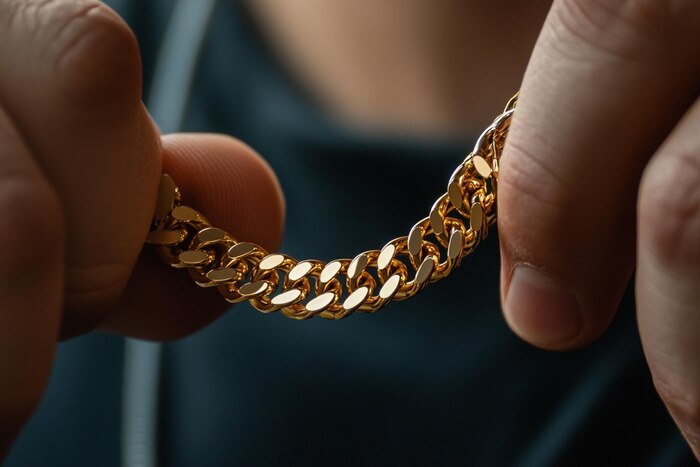
Learn what makes a damaged chain repairable, what affects the cost, and when replacement may make more sense.
Yes, a gold chain that has broken in multiple places can often be repaired. However, the remaining links must be in good enough condition to support the repair. The chain’s design, missing pieces, and overall wear also matter.
Several breaks do not always mean the necklace is beyond saving. A jeweler can inspect the whole chain and explain whether repair offers a practical solution.
The condition of the chain matters more than the number of breaks alone. Two damaged links in an otherwise sound necklace present a different problem from links that have worn thin throughout.
A jeweler will check:
Gold purity helps identify the material. It does not, by itself, decide whether a chain is repairable.
Multiple breaks can result from a sudden pull or wear that develops over time. A necklace caught on clothing may snap at several points. Daily friction can also weaken individual links.
Other possible causes include:
An inspection helps distinguish a single accident from widespread wear. That difference affects whether fixing the visible breaks will be enough.
Jewelers may reconnect links, replace damaged sections, or remove unusable links. The right approach depends on how the chain is made.
Professional soldering can reconnect suitable broken links. The jeweler carefully controls heat and solder to avoid damaging nearby links or joining them into a rigid section.
The aim is to secure the joint while preserving as much of the chain’s natural movement as possible.
Badly stretched or missing links may need replacement. Matching the link size, pattern, and gold color helps preserve the necklace’s appearance.
Some chain designs make finding a suitable match more difficult.
Removing a small damaged section may allow the remaining ends to reconnect. However, this can shorten the necklace.
Ask how much length you may lose and whether that change will affect how the chain sits around your neck.
Sometimes the failure involves a clasp, jump ring, or end fitting rather than the chain itself. These parts need checking too. A repaired chain still needs a secure closure.
Yes. Link design and construction affect how easily a jeweler can reach and reconnect the damaged area.
Cable and curb chains have individual links. Their condition and thickness help determine the repair options.
Rope chains use an interwoven pattern. Repairing several breaks requires attention to both the connection and the pattern.
Box chains have closely connected links. Repairs need to preserve flexibility.
Snake and herringbone chains can develop kinks or flattened sections. Damage may leave a visible change even after repair.
Hollow gold chains have thin walls. Crushed or worn sections can limit the available repair options.
No chain style guarantees a particular result. An inspection provides a clearer answer.
The cost depends on the work required, so an inspection is the best starting point for a quote.
The main factors include:
Three breaks may require three different solutions. Ask what the estimate includes and whether additional weak links need attention.
Confirm the expected completion time before approving the work.
Repair may make sense when the damage is limited and the remaining chain is in suitable condition. Sentimental value can also make preserving the original necklace worthwhile.
Replacement may be more practical when links have worn thin throughout, large sections are missing, or the necklace keeps breaking in new places.
Compare the repair quote with the cost of a suitable replacement. Also consider the expected appearance, remaining length, and how often you plan to wear it.
You can keep a meaningful pendant even if its chain needs replacing.
A repaired chain may look similar, but the result depends on the damage. Some repairs can leave a visible joint, a shorter necklace, or a less flexible section.
Repairing one area also does not renew worn links elsewhere. Ask whether the chain remains suitable for everyday wear and for the pendant you normally use.
A clear explanation before repair helps you decide what changes you can accept.
Stop wearing the chain and keep every loose piece. Small fragments may help the jeweler assess the damage and plan the repair.
Before your visit:
At Gold Refinery, we inspect damaged chains and explain the available repair options. Here is what to discuss during your visit.
Gold Refinery offers chain and necklace repair, along with clasp repair and replacement. Bring in your snapped necklace so we can inspect it and explain the next step.
Explore our jewelry repair services for help with broken chains, weak links, and damaged closures.

