
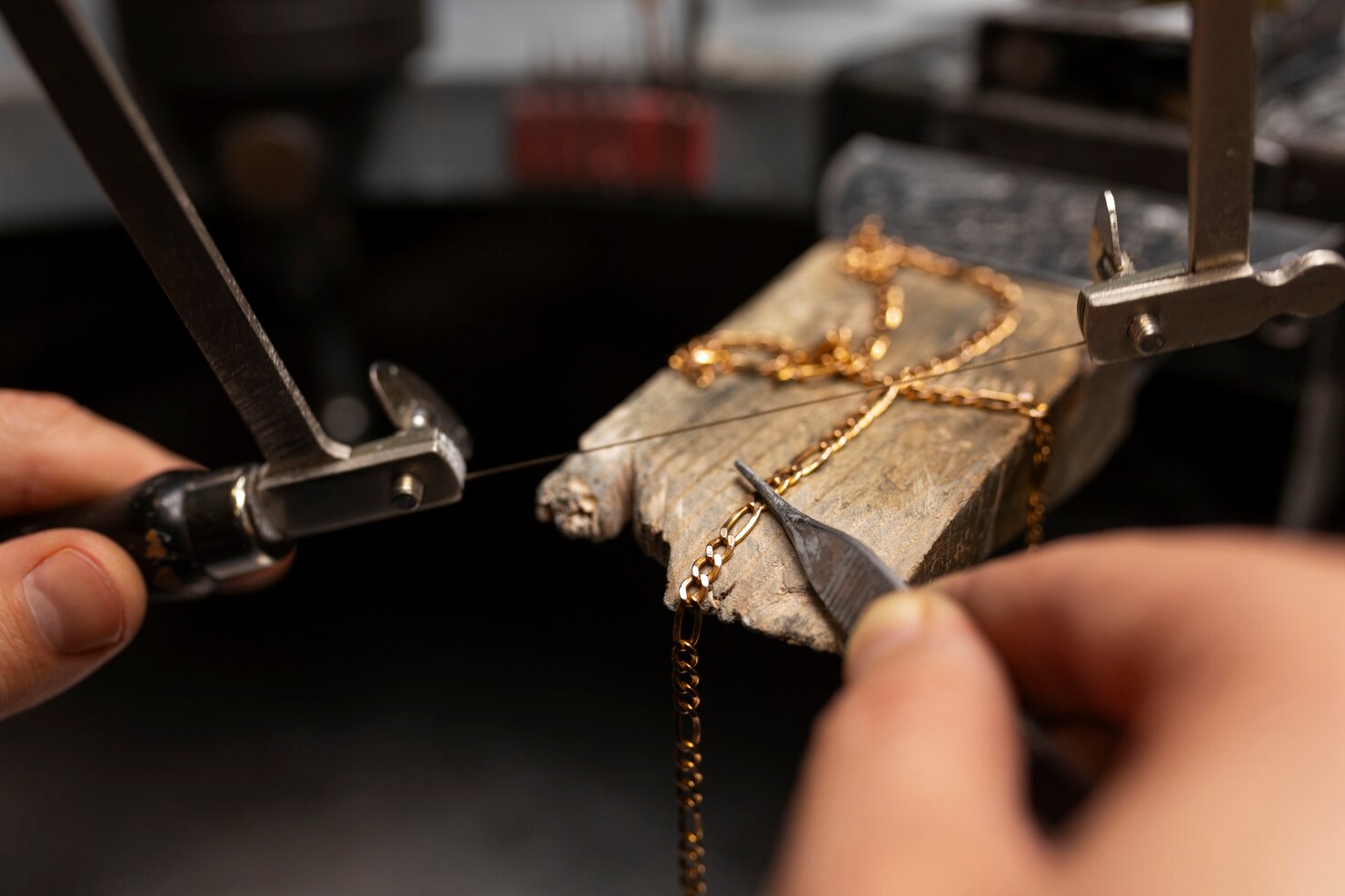
Understand the damage, explore repair options, and learn when your necklace needs a replacement clasp.
You can often fix a broken gold necklace clasp by repairing its connecting ring or replacing the damaged closure. The right solution depends on which part has failed. A loose attachment ring needs different work than a broken spring.
First, stop wearing the necklace. An unreliable clasp can let the chain slip off, putting your necklace and pendant at risk. Jewelers Mutual identifies a compromised clasp as a warning sign that needs attention.
Here is how to identify the problem and understand your repair options.
The problem may involve the clasp, its connecting ring, or the chain beside it. Check each area without pulling on the necklace.
A stuck lever, bent body, or failed spring can stop a clasp from working. With a lobster clasp or spring ring clasp, the closure should return fully when you release the lever.
If it stays open or leaves a gap, stop using it. Forcing the mechanism may cause more damage.
A jump ring is the small metal loop that connects the clasp to the chain. If this ring opens, the clasp may detach even when its mechanism still works.
Look for a gap, a stretched shape, or a thin section where the metal has worn.
Sometimes the clasp remains intact while an end link or attachment tab breaks. In this case, replacing the clasp alone will not solve the problem.
A jeweler should inspect nearby links, especially if the necklace has broken there before.
Remove the necklace and collect every loose piece before attempting any repair.
Follow these steps:
Bring the broken clasp and connecting ring to your jeweler. These parts can help show what failed and what needs replacing.
You can inspect the problem at home, but repairing fine gold jewelry requires care. Small parts can bend, scratch, or break under pressure.
Check whether the clasp still opens and closes. Look for a missing ring or a visible gap. These observations help you explain the damage without altering the piece.
Leave the repair to a jeweler when:
Avoid superglue and household solder. Glue cannot restore a reliable metal connection, and unsuitable solder can contaminate the repair area. Repeatedly bending a damaged gold component can also make it weaker.
A professional checks the whole fastening area before choosing a repair. The goal is to restore a secure connection without overlooking nearby damage.
A jeweler checks the jump ring for wear, distortion, and cracks. Depending on its condition, the ring may need closing, replacing, or soldering where the design allows.
A badly worn ring should not simply be squeezed shut and reused.
Clasp replacement may be more practical than repairing a tiny internal mechanism. The replacement should suit the chain’s size, attachment points, and pendant weight.
The jeweler also considers gold purity and color. A replacement for a 14K yellow gold chain should complement the necklace’s appearance and construction.
A broken end link or worn attachment tab may need separate work. The jeweler checks whether the surrounding metal can support the repaired connection.
Hollow gold chains need particular care because their thin walls can complicate repairs.
After repair, the jeweler checks how the clasp opens, closes, and connects to the chain. The finished closure should align properly and close fully.
The best replacement depends on the necklace’s design and how easily you can operate it.
Lobster clasp: A spring-operated closure available in different sizes. It may suit an upgrade when the chain and connecting rings are compatible.
Spring ring clasp: A round closure with a small operating lever. Its compact size can suit delicate necklaces, though some people find it harder to handle.
Box clasp: A tongue slides into a matching box. The fit and any safety catch need checking.
Hook clasp: A shaped hook connects to a loop. Its security depends on the design, fit, and metal condition.
Discuss yellow, white, or rose gold options with your jeweler. Gold karat, clasp size, and attachment strength matter alongside appearance.
The price depends on the damaged parts and the work needed. Replacing an attachment ring involves different materials and labor than fitting a new gold clasp.
Your estimate may include:
Ask for an estimate after inspection. Consider the necklace’s condition and sentimental value when deciding whether to repair it.
Timing depends on repair complexity, workload, and replacement-part availability. Confirm the expected completion date before leaving your necklace. An unusual clasp may require a special order.
Regular checks can help you spot a weak closure before it fails.
If you add a heavier pendant, ask whether the chain and clasp can support it.
Gold Refinery offers clasp repair and replacement, along with chain and necklace repair in Framingham. We inspect damaged jewelry and explain the available repair options.
Our jewelry repair services help you address damaged closures and worn connections before you wear your necklace again.
A damaged clasp does not always mean you need a new necklace. Repairing a connection or fitting a suitable replacement may help you wear it securely again.
Contact Gold Refinery to arrange an inspection and discuss your gold necklace clasp repair.

